How Much Does Millwork Drafting Cost? The Real 2026 Math
By Aman Pratap · · 7 min read · Millwork Drafting
If you are pricing a millwork project, the drafting line item can feel like a black box. Some providers quote by the hour, some by the sheet, some by the project, and the numbers can differ by hundreds of dollars for what sounds like the same work.
This guide does not give you a made-up average price. Instead it gives you something more useful: the real, official numbers behind what drafting costs, published by the US Department of Labor, and a clear explanation of how providers turn those costs into your quote. By the end you will know exactly what drives the number and how to budget for it.
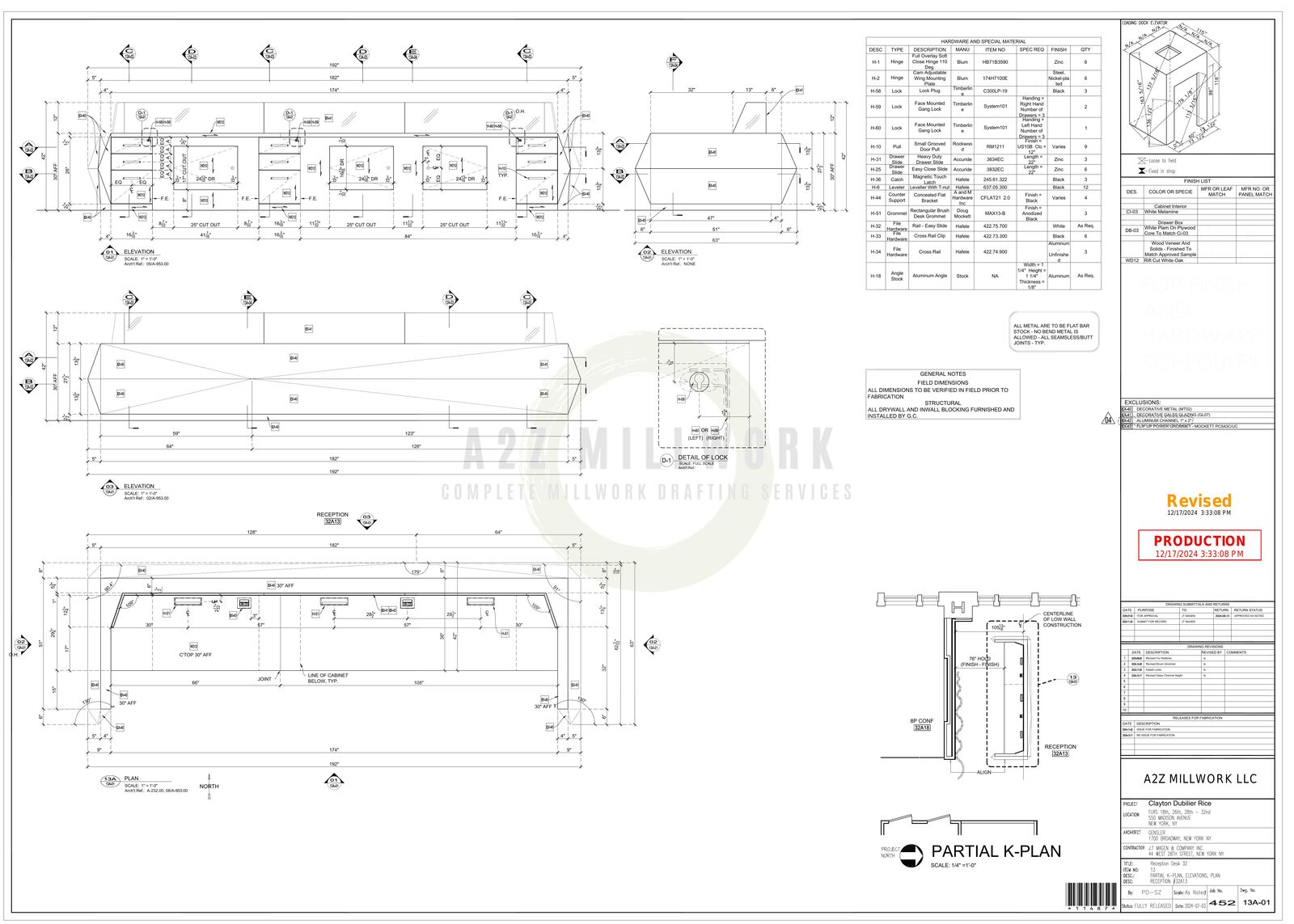
Start With the Real Cost of Drafting Labor
Every drafting quote, from any provider, is built on one ingredient: skilled drafting hours. The US government publishes exactly what those hours cost.
According to 2025 wage data from the US Department of Labor, architectural and civil drafters in the United States earn:
| Level | Hourly | Yearly |
|---|---|---|
| Lower range | $22.24 | $46,260 |
| Median | $31.80 | $66,150 |
| Upper range | $47.94 | $99,710 |
That is the wage alone. It is not what a drafter costs an employer, and it is not what a drafting service charges. Both add real costs on top, and understanding that difference is the key to understanding every quote you receive.
What an In-House Drafter Really Costs
Salary is only part of what an employer pays. Bureau of Labor Statistics data from March 2026 shows benefits make up 30.1 percent of total compensation costs in private industry: insurance, paid leave, retirement, and legally required contributions.
Apply that to the median drafter salary of $66,150 and the true cost of employment comes to roughly $95,000 per year. For a drafter in the upper wage range, it passes $140,000.
Then add tools. CAD and millwork software licenses add thousands of dollars per year per seat, and specialized platforms cost well more than a base CAD license. We compare the two big millwork platforms and what they involve in our guide to Microvellum vs Cabinet Vision.
None of this means hiring in-house is wrong. If you have 30 to 40 hours of drafting work every single week, a good in-house drafter can be the right call. The problem is the shop that needs 60 hours one month and 10 the next. That shop is paying full-time money for part-time output, and it is exactly the situation outsourced drafting was built for.
The Four Ways Millwork Drafting Is Priced
1. Hourly. You pay for drafting time. Flexible when scope is still moving, and the model where provider rates map most directly to the wage data above, plus the provider's overhead and margin. The risk is uncertainty: an unclear project burns hours.
2. Per sheet. Common for defined packages. The provider estimates the hours each sheet takes and prices accordingly, so a simple elevation sheet and a fully detailed section sheet do not cost the same. Predictable when your sheet count is known.
3. Per project. A fixed fee for the whole package, based on an estimate of total hours. Best when scope is locked. Expect one or two revision rounds included, with extra rounds billed hourly.
4. Retainer or dedicated drafter. For shops with steady volume, a monthly arrangement or dedicated remote drafter usually beats paying rack rates job by job, because the provider can plan capacity.
Whatever the model, the arithmetic underneath is the same: expected hours multiplied by an hourly cost. That is why the biggest savings never come from haggling the rate. They come from reducing the hours your project needs, which is what the next section is about.
The 7 Factors That Move Your Quote
When a drafting provider prices a package, these are the things that actually change the number:
1. Complexity of the millwork. Standard casework drafts fast. Custom radius work, integrated hardware, and mixed materials take longer per sheet.
2. Sheet count and level of detail. Full sections, machine-ready details, and hardware schedules take more hours than elevations alone.
3. Quality of your inputs. Clean architectural drawings and a clear scope cut hours. Fuzzy PDFs and missing dimensions add them.
4. Software requirements. Native Cabinet Vision or Microvellum files with CNC output are specialist work, and specialist hours sit at the upper end of the wage table above.
5. Revision rounds. Most quotes include one or two. Projects with many stakeholders and moving scope should budget for more.
6. CNC-ready or approval-only. Drawings that go straight to the machine need nesting, toolpaths, and machine files. Approval sets do not.
7. Turnaround time. Rush work compresses someone's schedule. Standard lead times get standard rates.
If you want to see what a fully detailed package looks like in practice, our sheet-by-sheet walkthrough of a 26-foot commercial bar shows exactly where the hours go.
Why the Cheapest Quote Is Rarely the Cheapest Outcome
A drafting set that comes back from the architect covered in red marks, or worse, sails through approval and then fails on the shop floor, costs more in rework than the original savings. Materials get cut wrong, installers improvise, and the schedule slips.
When you compare quotes, compare what is included, not just the number: how many sheets, how many revision rounds, which file formats, what turnaround, and whether the provider knows North American millwork standards. Our post on why millwork shop drawings come back in red covers the failure points that separate cheap drawings from good ones.
How to Budget Without Guesswork
Because every project's hours are different, the honest way to budget is not a rule of thumb. It is a real quote built from your actual scope:
- Count the drawing sheets your project needs, or share the architect's package and let the provider count.
- Decide what the drawings must do: approval only, or CNC-ready manufacturing files.
- Fix your revision expectations up front.
- Get an itemized quote so you can see what each part costs.
Any experienced drafting provider can turn your architect's drawings into a firm number quickly. If a provider cannot itemize their quote, that tells you something too.
And if you are pricing the millwork itself rather than the drafting, the counting side of that job has its own process. We walked through it step by step in how to estimate millwork.
Get an exact number for your project
Wage tables are useful for understanding costs, but your project deserves a real number. Send us your architectural drawings and scope, and we will return a firm, itemized quote within one business day. No obligation, and an NDA is available if you need one.
Related reading: drafting and estimating are sister services, and many shops outsource both. Here is how millwork estimating services work if bids are your other bottleneck.
Sources
FAQ's
What is included in a millwork shop drawing sheet?
A typical sheet covers plans, elevations, and sections for a run of millwork, with dimensions, materials, hardware callouts, and installation notes. Machine-ready packages add cut lists and CNC files.
Why do quotes for the same project differ so much?
Different providers assume different levels of detail, include different revision counts, and carry very different overhead. US wage data shows drafting labor itself spans more than double from the low range to the high range, and quotes inherit that spread. Always compare scope, not just totals.
Is overseas drafting worth a lower rate?
It can be, if the provider genuinely knows North American millwork standards, AWI requirements, and your software. The rate matters less than the rework rate. Judge providers by their drawings and references, not their price alone.
Does A2Z publish its prices?
We quote each project from its actual scope, because that is the only honest way to price drafting. Send us your drawings and you will have an exact number within one business day.