Millwork Takeoff Services: What You Get and How It Works
By Aman Pratap · · 6 min read · Estimation
Every millwork bid starts with the same grunt work: somebody has to count every cabinet, panel, foot of moulding, and knob in the set. That count is the takeoff, and the bid is only as good as that count. Count a buffet's moulding run at 20 feet when the drawings say 38 feet 6 inches, and the difference comes out of your margin after the job is won.
This post explains what a millwork takeoff actually covers, what you should get back when you pay for one, and when it makes sense to hand the counting to someone else. We do takeoff and estimating work for shops and contractors through our estimation and takeoff service, so the examples below come from our own project sheets.
What does a millwork takeoff include?
A takeoff turns a set of drawings into an itemized list of everything the job needs, with a quantity and a unit on every line, not a lump-sum guess.
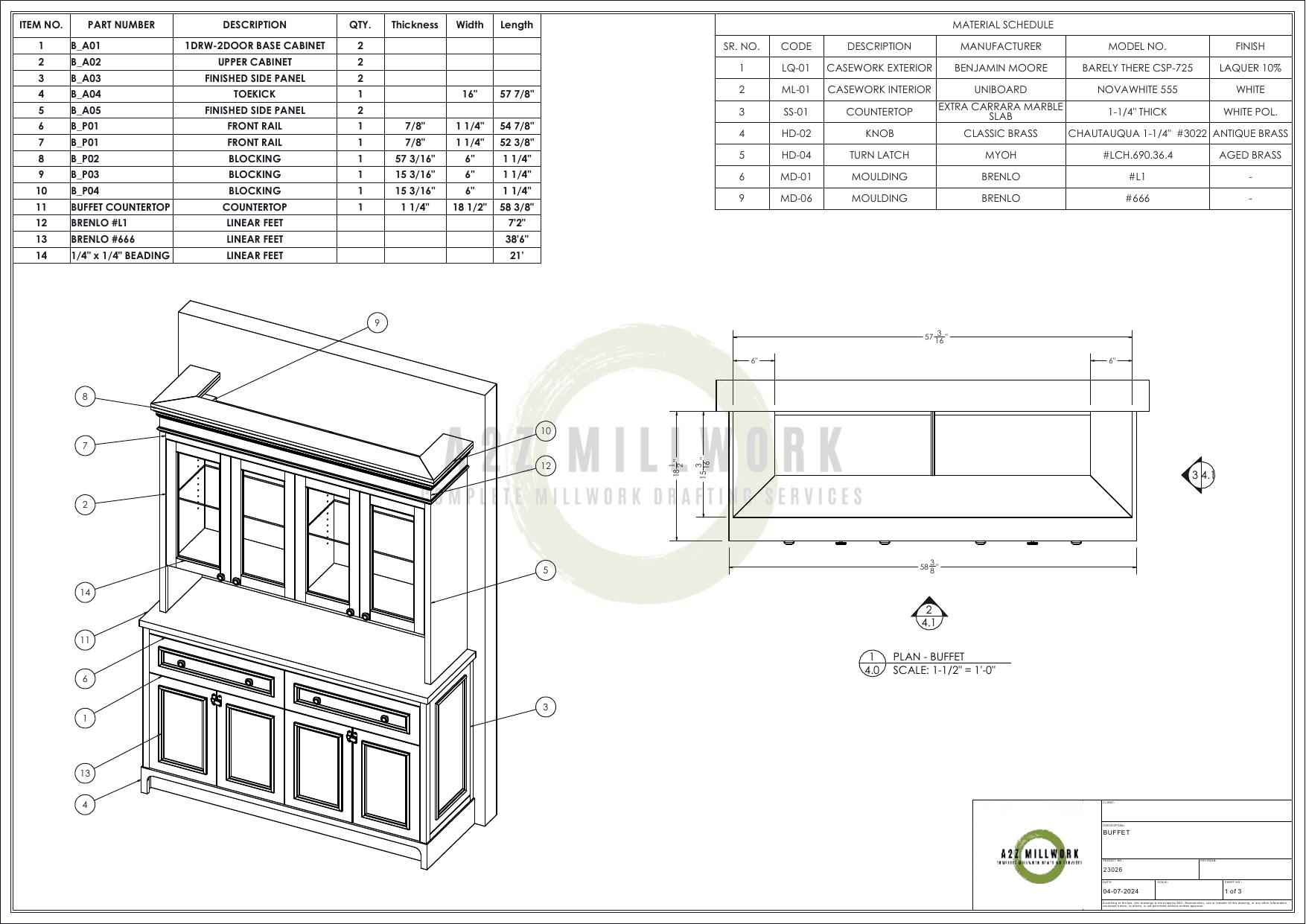
The sheet above is from one of our sets, a buffet and hutch. On that sheet the buffet breaks into fourteen numbered rows, and the unit changes depending on what's being counted:
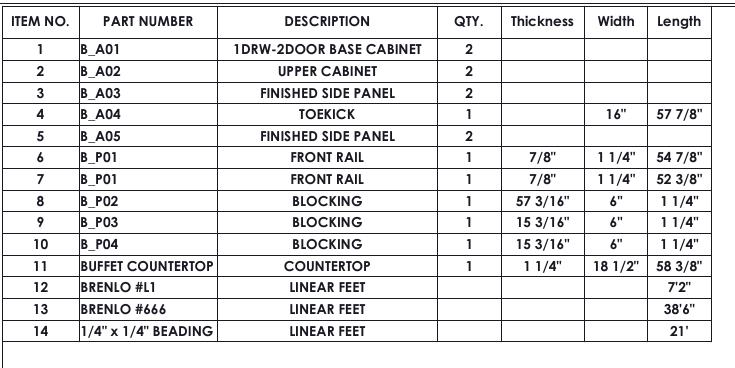
- Casework by count. Two base cabinets, two upper cabinets, four finished side panels.
- Parts by dimension. The toekick, rails, and blocking each carry the sizes they get cut to, because that's how they're priced.
- One countertop, exact size. 1 1/4 inch by 18 1/2 by 58 3/8.
- Mouldings in linear feet. Two Brenlo profiles at 7 feet 2 inches and 38 feet 6 inches, plus 21 feet of beading. Trim is bought and priced by the foot, so it gets counted by the foot.
Getting the unit right matters as much as getting the number right. A moulding counted as "3 pieces" is useless to purchasing; the same moulding at 38 feet 6 inches is a line on a purchase order. If you want to see how that discipline looks across a full drawing set, our takeoff to final bid walkthrough goes stage by stage.
The materials side: what gets priced
A count without materials is half a takeoff. Each line ties to a material schedule that names the actual products: the board for the casework interior, the lacquer color for the exterior, the marble for the top, the knobs and latches down to the model number and finish. When the count says 7 feet 2 inches of moulding and the schedule names the exact Brenlo profile, your estimator can price the whole piece without opening the drawings again. Without the product names attached, a count is just numbers somebody still has to decode.
What a takeoff deliberately leaves out
A proper takeoff also marks what isn't yours to price.
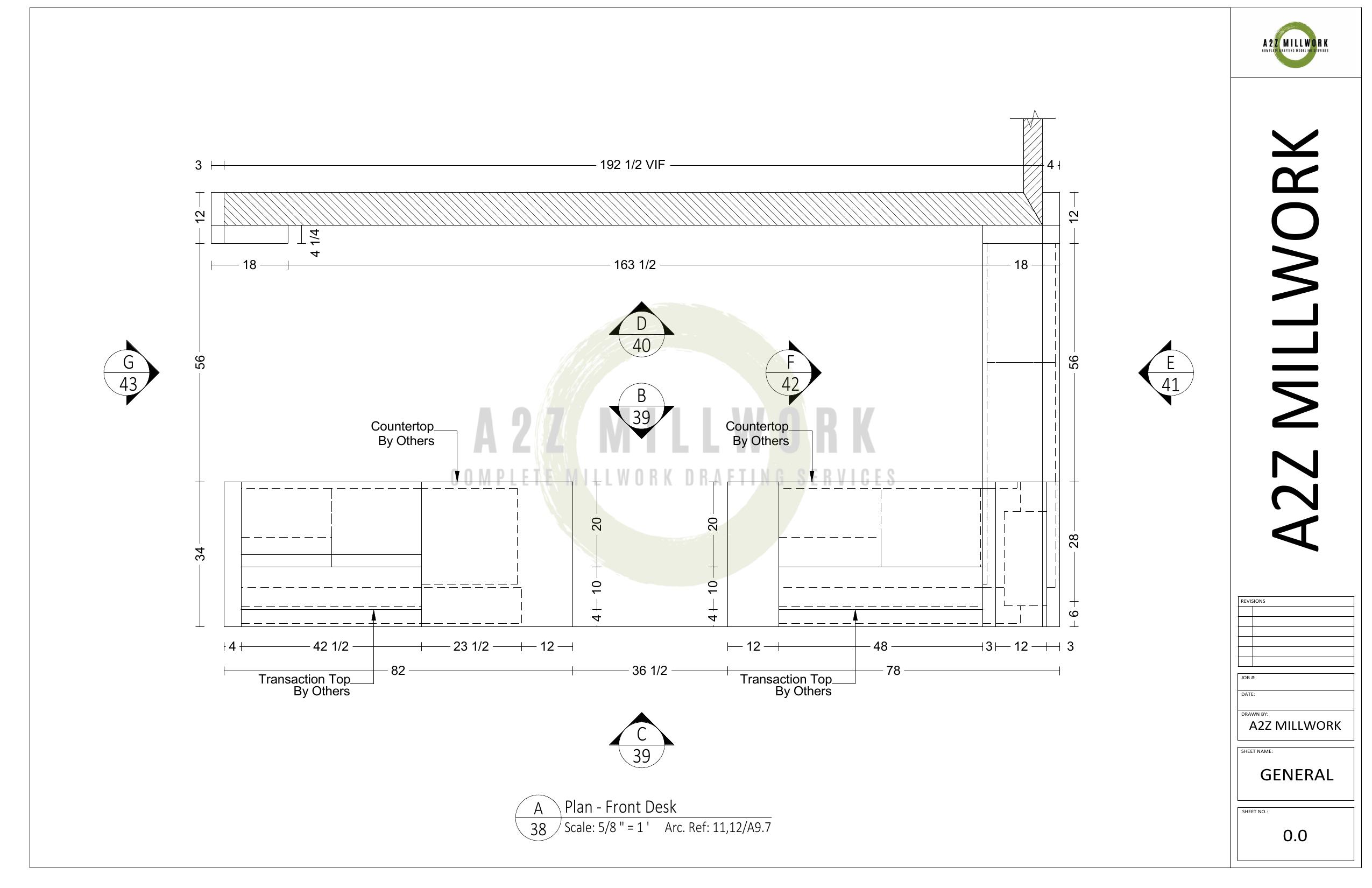
This reception desk plan carries callouts reading "Countertops By Others" and "Transaction Top By Others." Miss those callouts and you price tops you'll never supply, and your number comes in high for no reason. A careful takeoff flags every by-others item so the bid covers only the work that's in scope.
Takeoff vs estimate: which one do you need?
They're two stages of the same job. The takeoff is the counting: items, quantities, units, scope flags. The estimate is the pricing: material costs against the takeoff lines, labor, overhead, margin. Two careful people doing the same takeoff should land on the same quantities. The estimate carries your shop's numbers, your labor rates and your margins.
If the rates going into the bid are yours, you need the takeoff. If you want a number you can submit, you need both. We covered the full pricing stage in our guide to how millwork estimating services work.
Why shops hand the takeoff out
Bid season stacks up, the drawings pile grows, and the person who does the counting is also the person running jobs. Counting is slow, careful work. Miss a line and nobody catches it until the material order comes up short. Handing it out gets the owner their week back and puts fresh eyes on the drawings.
The other reason is volume on bid day. A shop quoting three projects in a week doesn't have the counting time for all three. An outside takeoff team handles the counting while the shop prices the jobs it already won.
Bidding more than you can count? Send us one project's drawings and get back an itemized takeoff that's ready to price, line by line. Get a free quote.
FAQ's
What do you need from us to start a takeoff?
The drawing set, in whatever form you have it. Our intake accepts PDF, DWG, DXF, image files, and zipped sets up to 10MB through the contact form.
Do you count hardware too?
Yes. Knobs, pulls, latches, and slides each get their own line tied to the schedule. On the buffet above, that means the Classic Brass knob and the MYOH turn latch, so purchasing knows exactly whose catalog to open.
Can you do the takeoff only, without pricing?
Yes, that's a common way to work with us. The sheet reads the same either way: every row number matches a balloon on the drawing's 3D view, so your estimator can see exactly which part each quantity belongs to before adding rates.
How do you handle items supplied by other trades?
They go on the list flagged as by others, counted but marked excluded, the way the reception desk plan above flags its countertop and transaction top. Your bid stays clean and nothing gets double priced.