What Is Millwork? A Manufacturer's Guide to Architectural Millwork
By A2Z Team · · 6 min read · Millwork Drafting
Millwork is custom woodwork and casework manufactured to fit a specific building: cabinetry, paneling, trim, doors, stairs, and architectural features produced to a drawing rather than pulled off a shelf. If you run a shop or manage projects, that one distinction, built to spec versus bought as stock, is what separates millwork from ordinary carpentry and lumber.
Most articles answering "what is millwork" are written for homeowners and interior designers. This one is written for the people who actually build it: manufacturers, casework shops, and contractors who outsource their architectural millwork drafting. Here is what the term means in the trade, how it is categorized, and how a millwork package moves from a design intent to a finished, installed piece.
What Is Millwork, Exactly?
In the building trades, millwork refers to any woodwork produced in a mill or shop to a project's specifications. The name is literal: historically these pieces were run through a mill. Today the mill is a CNC router and a shop floor, but the meaning holds. Millwork is made to order, dimensioned to a real opening, and matched to a specified material and finish.
That is different from three things people often confuse it with:
- Stock or off-the-shelf components, which are mass produced to standard sizes.
- Rough carpentry, which is structural framing hidden inside walls and floors.
- Finish carpentry, which is site-installed trim work, often using pre-made moldings.
Millwork sits above all of these. It is the custom, visible, made-to-fit woodwork that defines how a finished space looks and functions, from a hotel reception desk to a hospital nurse station to a high-end residential kitchen.
Architectural Millwork vs. Casework vs. Carpentry
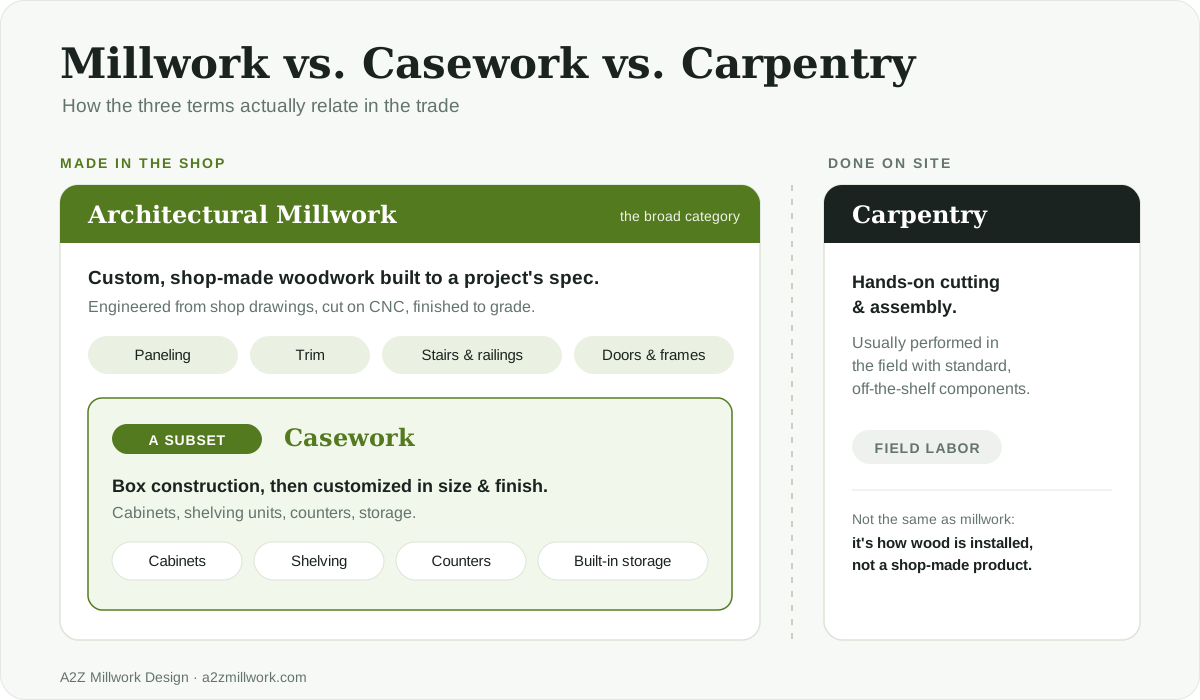
Three terms get used interchangeably on job sites, and getting them right matters when you are scoping work or reading a spec.
Architectural millwork is the broadest term. It covers custom, non-standard woodwork designed for one building: curved reception desks, paneled boardroom walls, feature stairs, and one-off cabinetry.
Casework is a subset of millwork: boxes. Cabinets, shelving units, counters, and storage built from standardized box construction, then customized in size and finish. Most casework is repetitive, which is why it is a natural fit for parametric software. If you want the full breakdown, see millwork vs. casework and how they differ.
Carpentry is the labor of cutting and assembling wood, usually on site. The difference between millwork and carpentry comes down to where and how the work is produced: millwork is engineered and fabricated in a controlled shop from detailed drawings, while carpentry is executed by hand in the field.
The practical takeaway for a manufacturer: millwork and casework are what your shop produces, and both live or die on the quality of the shop drawings behind them.
The Main Types of Millwork
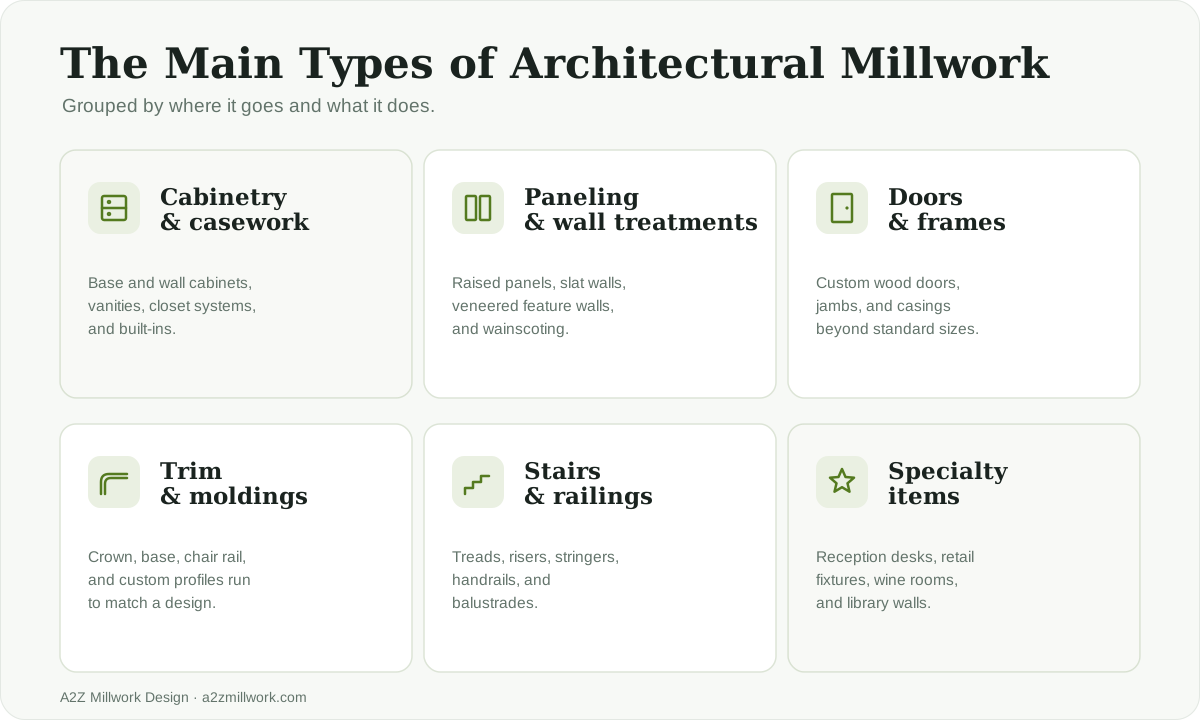
Millwork is usually grouped by where it goes and what it does:
- Cabinetry and casework: base cabinets, wall cabinets, vanities, closet systems, and built-ins.
- Paneling and wall treatments: raised panels, slat walls, veneered feature walls, and wainscoting.
- Doors and frames: custom wood doors, jambs, and casings beyond standard sizes.
- Trim and moldings: crown, base, chair rail, and custom profiles run to match a design.
- Stairs and railings: treads, risers, stringers, handrails, and balustrades.
- Specialty items: reception desks, retail fixtures, wine rooms, and library walls.
A single commercial project can pull in most of these at once, which is why coordination between the millwork package and the architect's set is so important.
How Millwork Is Actually Made
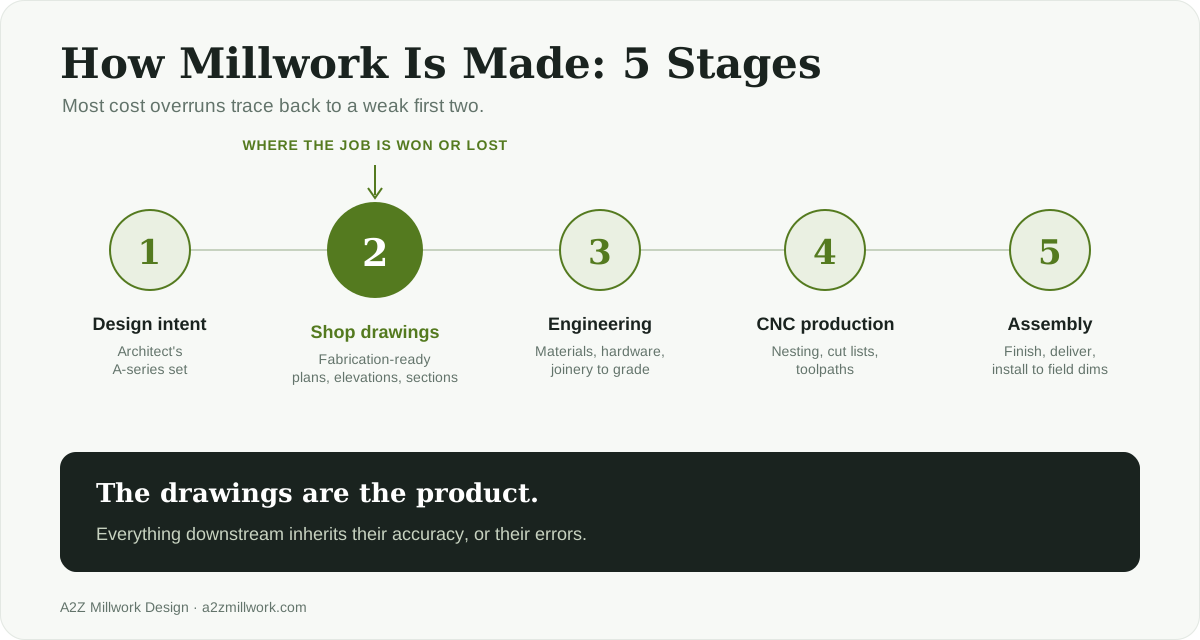
For a manufacturer, "what is millwork" is really a process question. A piece moves through five stages, and most cost overruns trace back to a weak first two.
- 1. Design intent. The architect issues an A-series set showing what the space should look like. This is design, not fabrication data. It rarely tells the shop how to build anything.
- 2. Shop drawings. A drafter converts design intent into fabrication-ready drawings: dimensioned plans, elevations of every visible face, construction sections, material callouts on every surface, and explicit scope notes for items by other trades. This is where a project is won or lost. Clean, complete Cabinet Vision shop drawings mean the CNC files come out right the first time.
- 3. Engineering and material selection. Substrates, laminates, veneers, hardware, and joinery are specified and verified against the standards the job is graded to.
- 4. CNC production. Approved drawings drive nesting, cut lists, and toolpaths. The router cuts parts to the tolerances the drawings called for, not the tolerances the shop hopes for.
- 5. Assembly, finishing, and installation. Parts are assembled, finished to the specified sheen and color, delivered, and installed to field-verified dimensions.
The lesson repeated across thousands of packages: the drawings are the product. Everything downstream inherits their accuracy or their errors.
The Standards That Define Quality Millwork
Millwork is not judged by opinion. In North America, the reference is the ANSI/AWI architectural woodwork standards, administered by the Architectural Woodwork Institute (AWI), with the AWMAC standards used across Canada. These define three quality grades:
- Economy for utilitarian, back-of-house work.
- Custom for the majority of commercial projects.
- Premium for the highest visual and construction quality.
A spec that calls for "AWI Custom grade, AWI QCP certified" is telling your shop exactly what tolerances, materials, and joinery are acceptable. Drawings that reference those standards on every relevant view are what let a fabricator hit grade without guessing, and what protect the shop if scope is ever disputed.
Why This Matters for Millwork Manufacturers
Here is the part most definitions skip. For a manufacturer, millwork is not a decorative category. It is a margin category. The same cabinet run can be profitable or a loss depending entirely on whether the shop drawings were complete before material was cut.
That is why a growing number of U.S. millwork manufacturers separate the two skills: they keep fabrication in house and outsource the drafting to a dedicated partner who produces AWI-compliant, CNC-ready packages at volume. The shop stays fully loaded on the machines, and the drawings arrive clean.
If your shop produces architectural millwork or casework, the single highest-leverage improvement is not a faster router. It is drawings so complete that the router never waits on an answer.
Build to Spec, Every Time
Millwork is only as good as the package behind it. A2Z Millwork Design produces fabrication-ready millwork shop drawings and drafting services for manufacturers across the US, Canada, and Australia, drawn in AutoCAD, Cabinet Vision, or Microvellum to match your shop's workflow and graded to AWI and AWMAC standards. Contact us for a free quote with your next project brief.
FAQ's
What is millwork in construction?
Millwork is custom woodwork manufactured in a shop to a project's specifications: cabinetry, casework, paneling, trim, doors, and stairs built to detailed drawings rather than bought as stock components.
Is millwork the same as casework?
No. Casework is a subset of millwork. Casework refers specifically to box-type construction such as cabinets and shelving, while millwork is the broader category that also includes paneling, trim, stairs, and custom architectural features.
What is the difference between millwork and carpentry?
Millwork is engineered and fabricated in a controlled mill or shop from detailed shop drawings. Carpentry is the hands-on cutting and assembly of wood, usually performed on the job site with standard components.
What are shop drawings in millwork?
Shop drawings are fabrication-ready documents that translate an architect's design intent into exact instructions for the shop: dimensioned plans, elevations, sections, material callouts, and scope notes. They are what the CNC and assembly teams actually build from.
What standards apply to architectural millwork?
In the U.S., the ANSI/AWI architectural woodwork standards (with AWMAC in Canada) define quality grades of Economy, Custom, and Premium, setting the tolerances, materials, and joinery required for each grade.